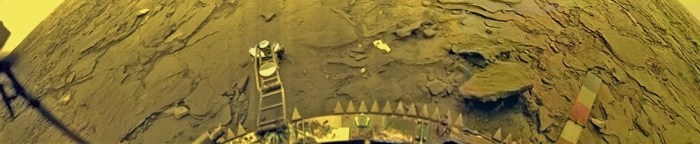
Venus is not a nice place to visit. It rains sulphuric acid and has a surface temperature of approximately 465 degrees centigrade. Add to that a spacecraft crushing atmospheric pressure of about 90 times greater than that on Earth and you get the picture. Venus is never going to be a holiday destination! But it may not always have been such a hellish place. It has been suggested that in the past Venus may have been cool and wet, with oceans on its surface. Then apparently it all went wrong. A runaway greenhouse effect kicked in, almost certainly due to a progressive build up of carbon dioxide in the atmosphere. And here’s the thing. Venus may not be a freak planet. Instead it may be the norm. Many Earth-like planets around other star’s may start out cool and wet, with surface oceans, only to have them boil away and end up like Venus. This could also be the fate of our Earth. Worth bearing in mind if you are in denial about climate change. Climates change and sometimes it’s not good news.
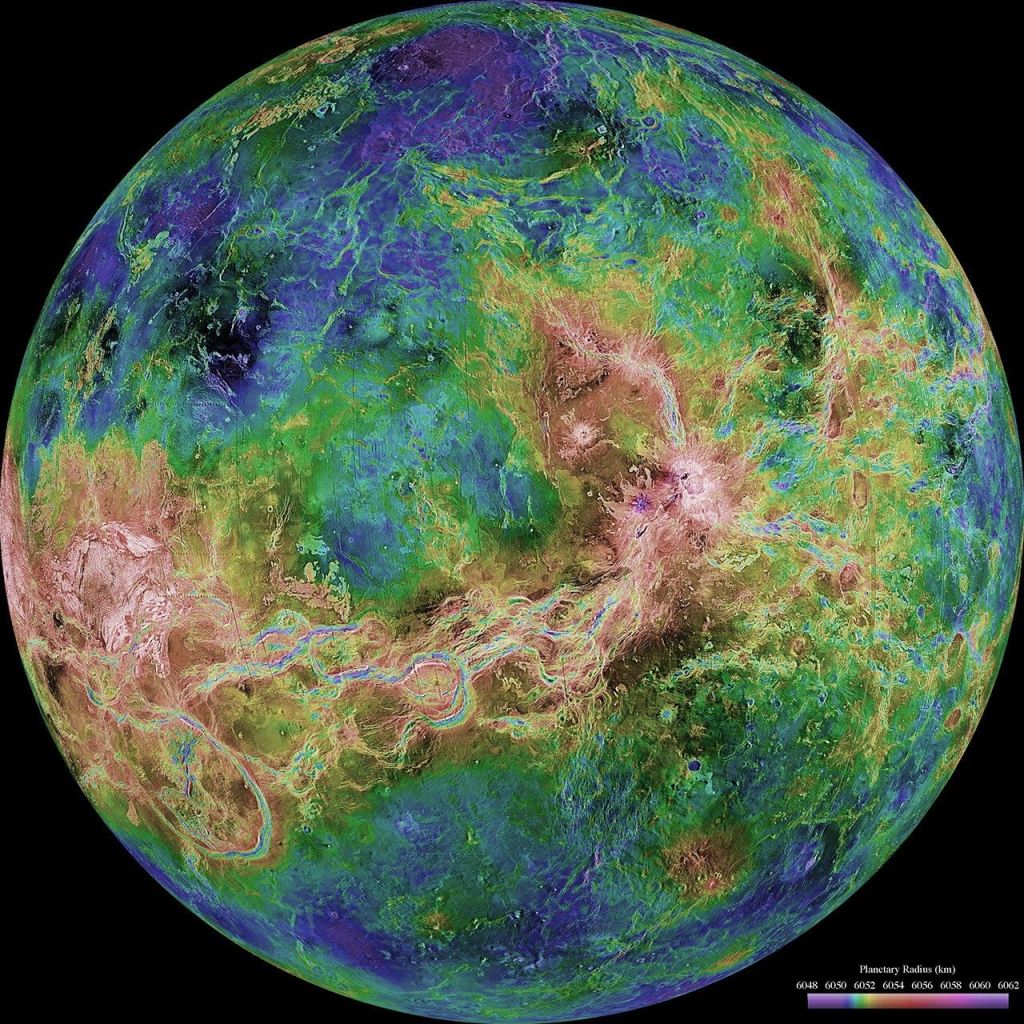
Unfortunately, in comparison to Mars, we know very little about Venus. And yet it is very similar in size and composition to Earth. Some people even describe it as Earth’s twin, which is stretching things a bit, or is it? We urgently need to study Venus in order to understand how and why it became the nightmare world it is today. A fleet of dedicated Venus missions are planned in the coming decade or so, starting with the private initiative “Venus Life Finder” to be launched in 2026. This will be followed in 2028 by the Indian orbiter mission Shukrayaan. NASA has two Venus missions planned. DAVINCI is due for launch in 2030/31 and will look at the atmosphere during a number of flybys and then drop a descent probe that will make atmospheric measurements and take images of the surface. VERITAS, to be launched in 2031, will map the surface of Venus at high resolution. ESA will also be sending an orbiter mission in 2031 called EnVision.
If these missions all make it to Venus as planned then we should start to get a much clearer picture of why the planet evolved to its present nightmarish state. And of course these results may have implications for our Earth. In the distant future our beautiful blue world may come to resemble present day Venus. It is not an inviting prospect. We should study Venus and try to understand what happened. You never know, it may help us to manage things a little better here on present day Earth.


 Meteorites: The Blog from the Final Frontier